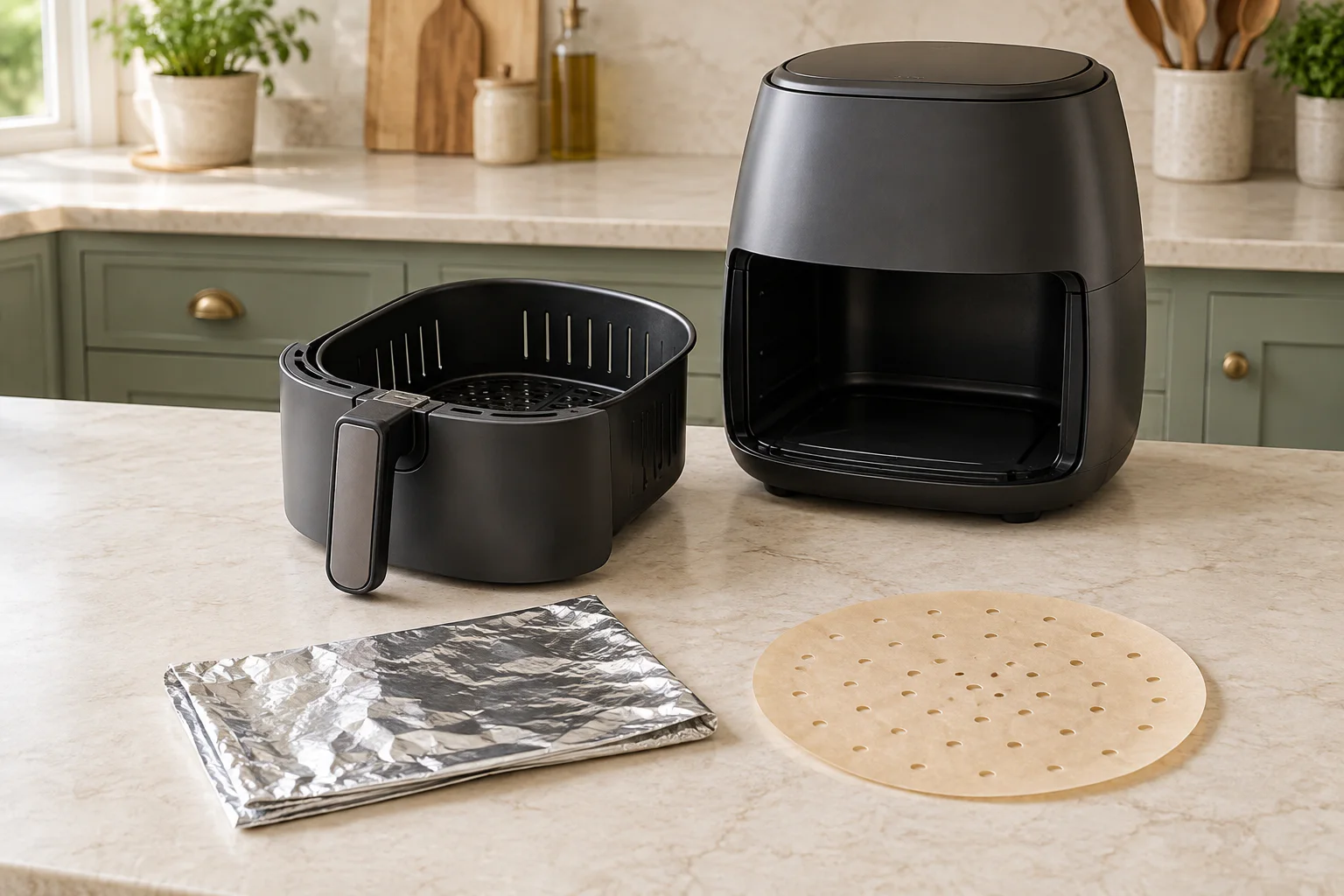
A liner can shorten clean-up, catch a sticky glaze and protect delicate food. It can also block the airflow that makes an air fryer work. The useful question is not simply whether liners are safe, but whether your model permits one and whether a liner improves the particular food you are cooking.
Use only a food-contact liner that is rated above your cooking temperature and permitted by your appliance manual. Keep it inside the basket, smaller than the cooking area and securely weighted with food. Never preheat with loose parchment or foil, and leave the liner out when maximum airflow and crispness matter.
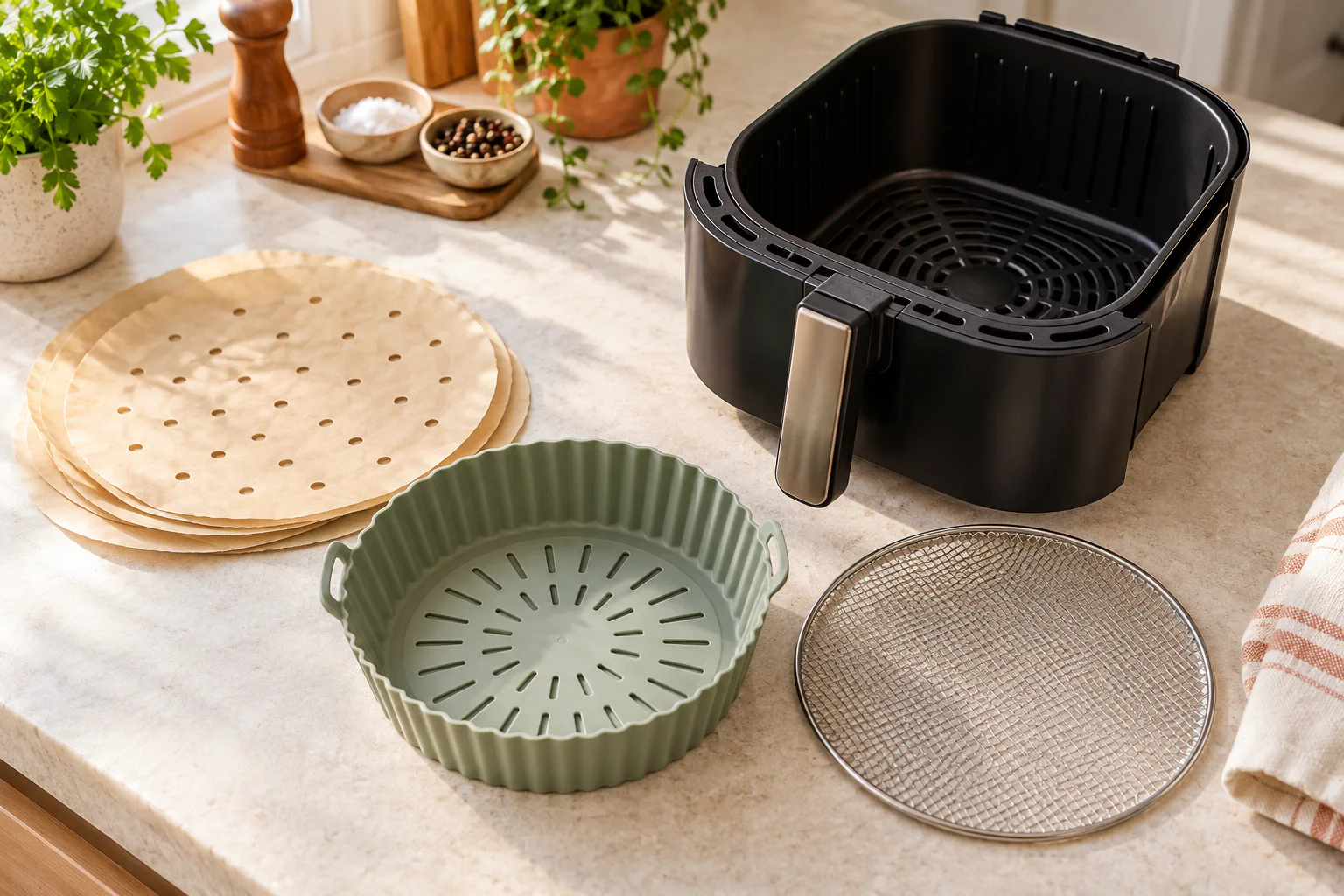
The main types of air fryer liner
Each material changes airflow, browning and clean-up in a different way. A product labelled for air fryers is not automatically right for every appliance, so check both its temperature rating and your manual.
Considering foil instead? Read our foil and parchment safety guide for the manufacturer-specific checks.
- Perforated parchment: disposable and useful for sticky or delicate food; the holes preserve more airflow than a solid sheet.
- Paper bowls: convenient for saucy food, but their raised sides and solid base can reduce browning around the bottom.
- Silicone liners: reusable and easy to wash; ridges may lift food above pooled fat, although solid silicone still reduces direct airflow.
- Aluminium foil: moulds closely around food, but some manufacturers advise against it and acidic ingredients can react with aluminium.
- Mesh mats: reusable and airflow-friendly when approved for the appliance, but harder to clean after sugary marinades.
Size and airflow matter more than shape
Choose a liner that sits completely within the basket or approved baking accessory. It should not curl over the rim, cover every ventilation slot or reach towards the heating element. A small gap around the edge allows moving hot air to reach the food.
Round, square and dual-drawer liners are sold in many sizes, but model names alone are not a guarantee of fit. Measure the flat internal cooking area rather than the outside of the drawer. For paper, a slightly undersized sheet is safer and usually cooks better than one that rides up the walls.
Smart tipPlace parchment in the basket only when the food is ready to sit on top. Even correctly sized paper can lift towards the heater when the fan runs.
How to use an air fryer liner safely
Read the appliance instructions first. Philips, for example, advises against baking paper and foil in specified Airfryer models because covering the basket reduces airflow and loose material may be drawn into the heater. Other manufacturers may permit suitable liners in particular configurations.
If your manual permits a liner, place it in only when the food is ready to go on top. Spread enough food across it to prevent any corner lifting in the fan. Stay within the liner's stated temperature limit, keep it away from exposed elements and stop cooking if it shifts, scorches or produces an unusual smell.
- Use products identified as suitable for food contact.
- Never substitute wax paper, kitchen roll, printer paper or plastic film.
- Do not cut a liner so large that it blocks the basket's air holes.
- Do not use an empty liner during preheating.
- Never improvise clips or weights that are not approved air fryer accessories.
When cooking without a liner is better
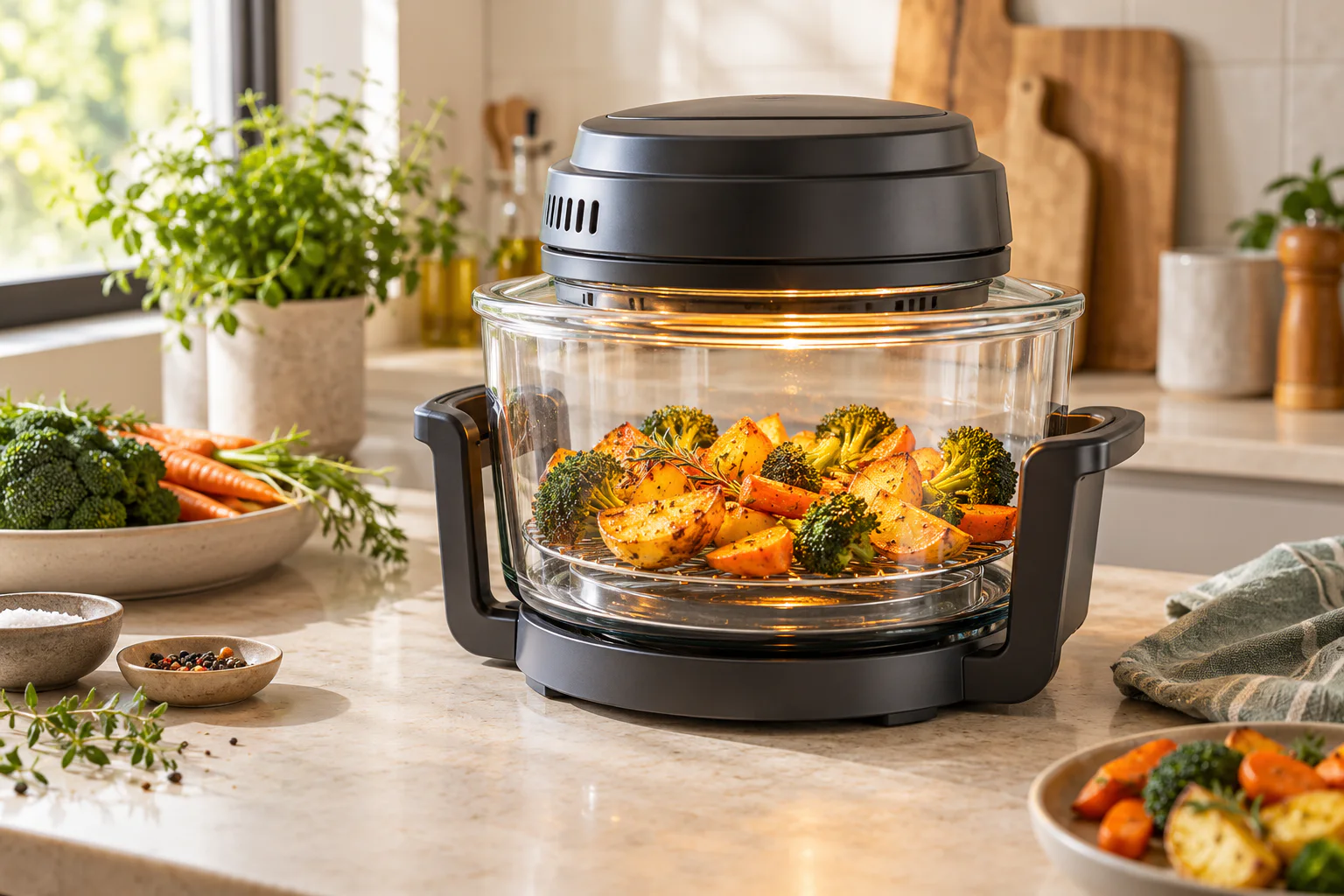
Chips, roast potatoes, breaded food and vegetables generally brown best when hot air can circulate directly around them. A liner beneath these foods can trap steam and leave the underside softer. A clean, lightly oiled basket is often the better choice.
Skip a liner when the manual prohibits it, when the food is too light to hold it down, or when the liner would sit close to an exposed heater. For very fatty food, follow the manufacturer's instructions for managing drips rather than covering the collection pan and changing the designed airflow.
Cleaning reusable silicone and mesh liners
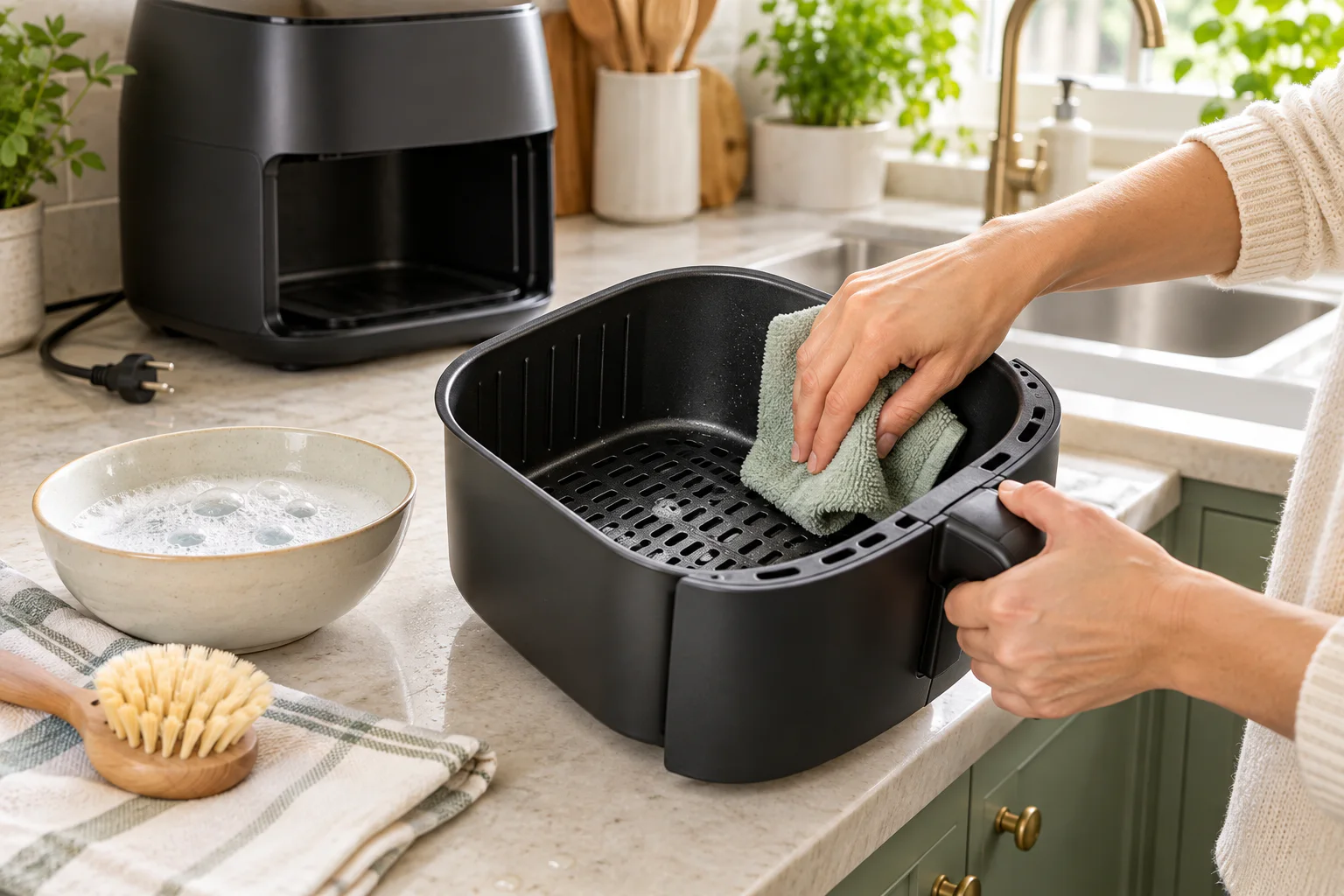
Let a reusable liner cool before removing it. Wash it with warm water, washing-up liquid and a non-abrasive sponge, paying attention to ridges and perforations where grease collects. Only use a dishwasher if the liner's instructions allow it.
Retire a silicone or mesh liner if it becomes torn, sticky, permanently warped or starts shedding material. Discolouration alone is not always damage, but an unexplained smell or surface change is a reason to stop using it and check with the supplier.
For the drawer and appliance itself, follow our guide to cleaning an air fryer.
Which liner should you buy?
For occasional sticky food, a correctly sized perforated parchment liner is the least complicated option. Frequent cooks may prefer a reusable silicone or mesh design, provided it fits and the cleaning does not become more work than washing the basket.
Look for clear dimensions, a specific maximum temperature, food-contact suitability and care instructions. Avoid vague products that make sweeping safety claims but provide no material specification or manufacturer details.
Air fryers vary in power and basket design. Use these timings as a starting point and follow your manufacturer’s instructions where they differ.
Frequently asked questions
Do air fryer liners stop food getting crispy?
Solid liners can soften the underside because they block direct airflow and trap moisture. Perforated parchment or mesh preserves more circulation, but cooking directly in the basket usually gives the strongest all-round browning.
Can you preheat an air fryer with a liner inside?
Do not preheat with loose paper or foil. The fan can lift it into the heating element. Add an approved liner only with enough food on top to hold it securely.
Are silicone liners safe?
Use a food-contact silicone liner from a traceable supplier, stay below its stated temperature limit and follow your air fryer's manual. Stop using it if it tears, becomes sticky or develops an unusual smell.
Can air fryer liners go in the dishwasher?
Some reusable silicone and mesh liners can, but the product instructions decide. Paper and parchment liners are single-use.
Should liners have holes?
Holes help moving air reach more of the food and generally improve browning. Solid bowls are more useful for sticky or saucy dishes where containing drips matters more than a crisp underside.
Sources and further reading
Safety, appliance and recipe guidance was checked against the following sources. Always follow the instructions for your own model.