A quick clean after cooking prevents grease from becoming a bigger job. It also helps limit smoke, stale smells and flavour transfer while protecting the basket's non-stick finish. The job is straightforward once you know which parts can be washed and which must only be wiped.
Unplug the air fryer and let it cool completely. Remove the basket, crisper plate and drawer, then wash the removable parts with warm water, washing-up liquid and a soft sponge. Wipe the cooking chamber and exterior with a barely damp cloth, following your manual for the heating element. Dry every part fully and never immerse the main unit.
What you need (and what to avoid)
For a routine clean, you only need warm water, ordinary washing-up liquid, a soft sponge or microfibre cloth, and a soft nylon brush or old toothbrush for corners. A dry towel or draining rack completes the job.
Keep steel wool, metal scrapers, hard-bristled brushes and abrasive scouring powders away from coated parts. Do not use oven cleaner, disinfectant spray or strongly perfumed cleaner inside the cooking chamber unless the manufacturer specifically approves it. These products can damage finishes or leave residue where food is cooked.
How to clean an air fryer step by step
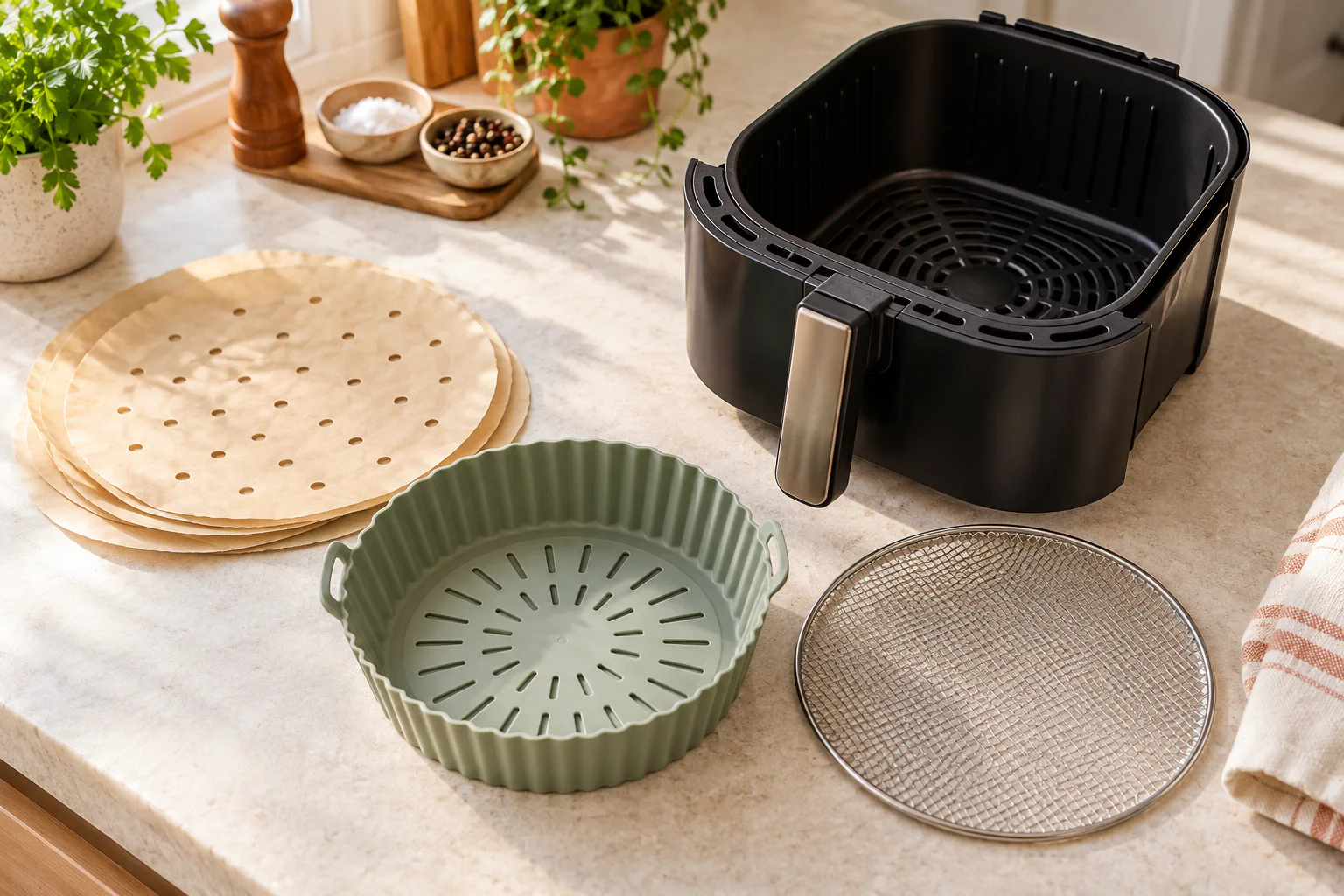
First, switch off and unplug the appliance, then allow it to cool completely. Remove loose crumbs over a bin or sink. Take out every removable piece, which may include the basket, drawer, crisper plate, rack or divider depending on the model.
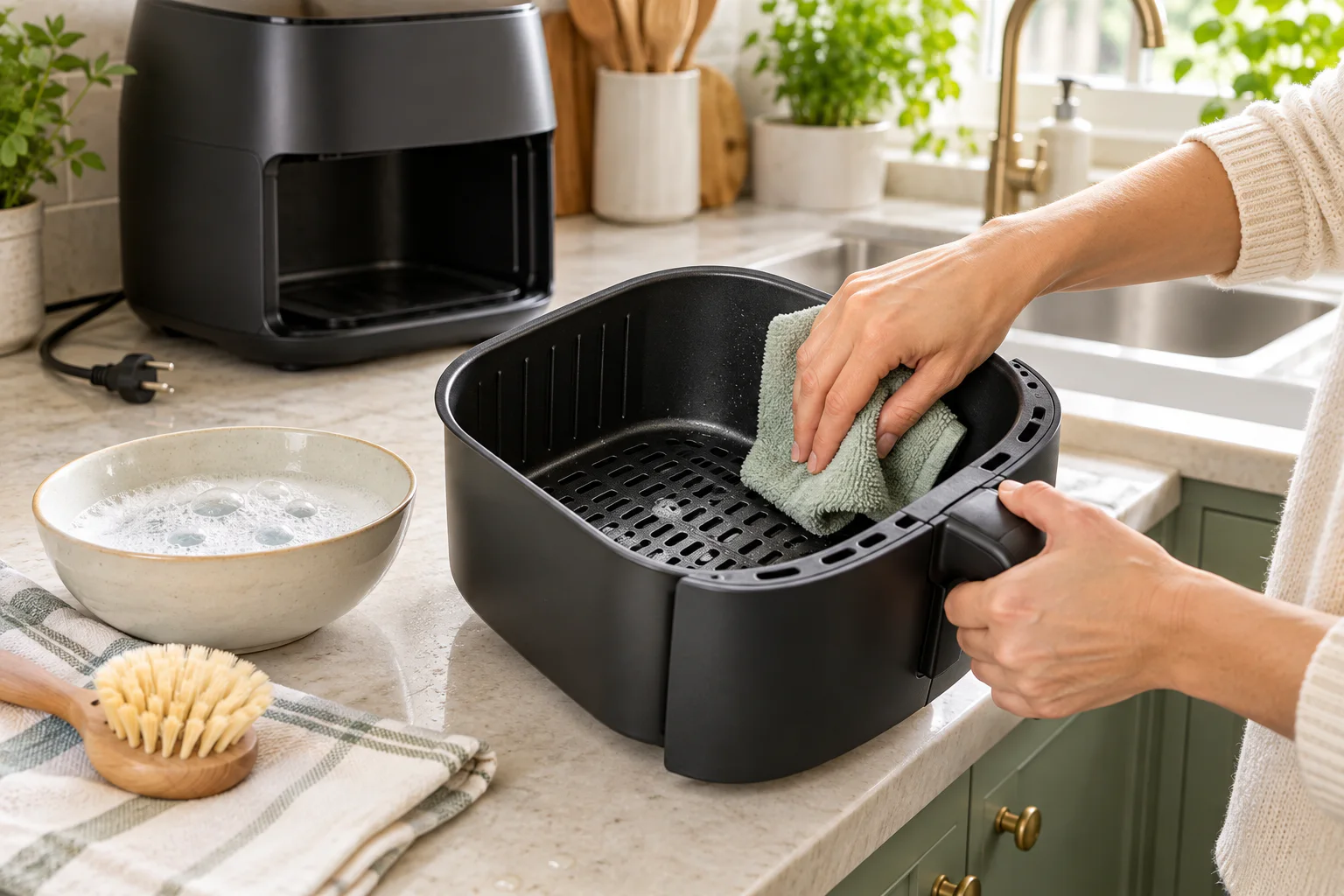
Wash those removable parts in warm soapy water with a soft sponge. Turn the basket over and clean the underside, rim, handle joint and silicone feet, where grease is easily missed. Use a soft nylon brush for mesh, slots and tight corners rather than forcing a metal tool into them.
Wipe the cooking chamber with a well-wrung damp cloth, taking care not to push liquid into vents or electrical areas. Wipe the controls and outside casing, then dry the removable parts and main unit fully before reassembly. Never run the appliance, plug it in or store it away while any part is wet.
If smoke is the reason you are cleaning, start with what to do when an air fryer smokes before attempting another cook.
Smart tipClean little and often. Grease is much easier to remove before repeated heating turns it into a dark, sticky film.
How to remove baked-on grease
Let the removable basket, drawer or crisper plate soak in warm water with a small amount of washing-up liquid for five to ten minutes, or for the time recommended by the manufacturer. This softens residue so it can be lifted with a non-abrasive sponge instead of scraped.
Repeat the soak for stubborn patches and work gently with a soft nylon brush. Avoid knives, forks and metal spatulas: a small scratch can become a larger patch of damaged coating over time. Do not fill the main appliance with water, and do not pour a cleaning mixture into the cooking chamber.
If normal washing does not shift a stain, check the manual or the manufacturer's support page before trying a degreaser, bicarbonate of soda, vinegar or any other household remedy. A product that is harmless on stainless steel may be unsuitable for a non-stick coating or a particular heating assembly.
Cleaning the interior and heating element
Grease can collect on the roof of the cooking chamber and around the heater, especially after cooking fatty foods. Only inspect this area when the air fryer is unplugged and completely cool. Remove the drawer so you can see clearly, and use good lighting rather than reaching in blindly.
The safe method differs by appliance. Some manufacturers allow the interior and element to be cleaned with a soft, lightly damp sponge or a soft-to-medium nylon brush; others give different positioning or access instructions. Follow the manual for your exact model, keep water away from the fan and electrical parts, and never use a steel-wire brush.
Do not bend the heating coil or try to dismantle its guard. If grease is trapped where you cannot reach it safely, or the element looks damaged, stop and contact the manufacturer rather than removing panels yourself.
Dual-drawer and oven-style air fryers
On a dual-drawer model, clean both drawers, both crisper plates and any removable divider. Grease can collect differently on each side, so do not assume the unused-looking zone is clean. Check around drawer rails and seals with a damp cloth, without flooding the gaps.
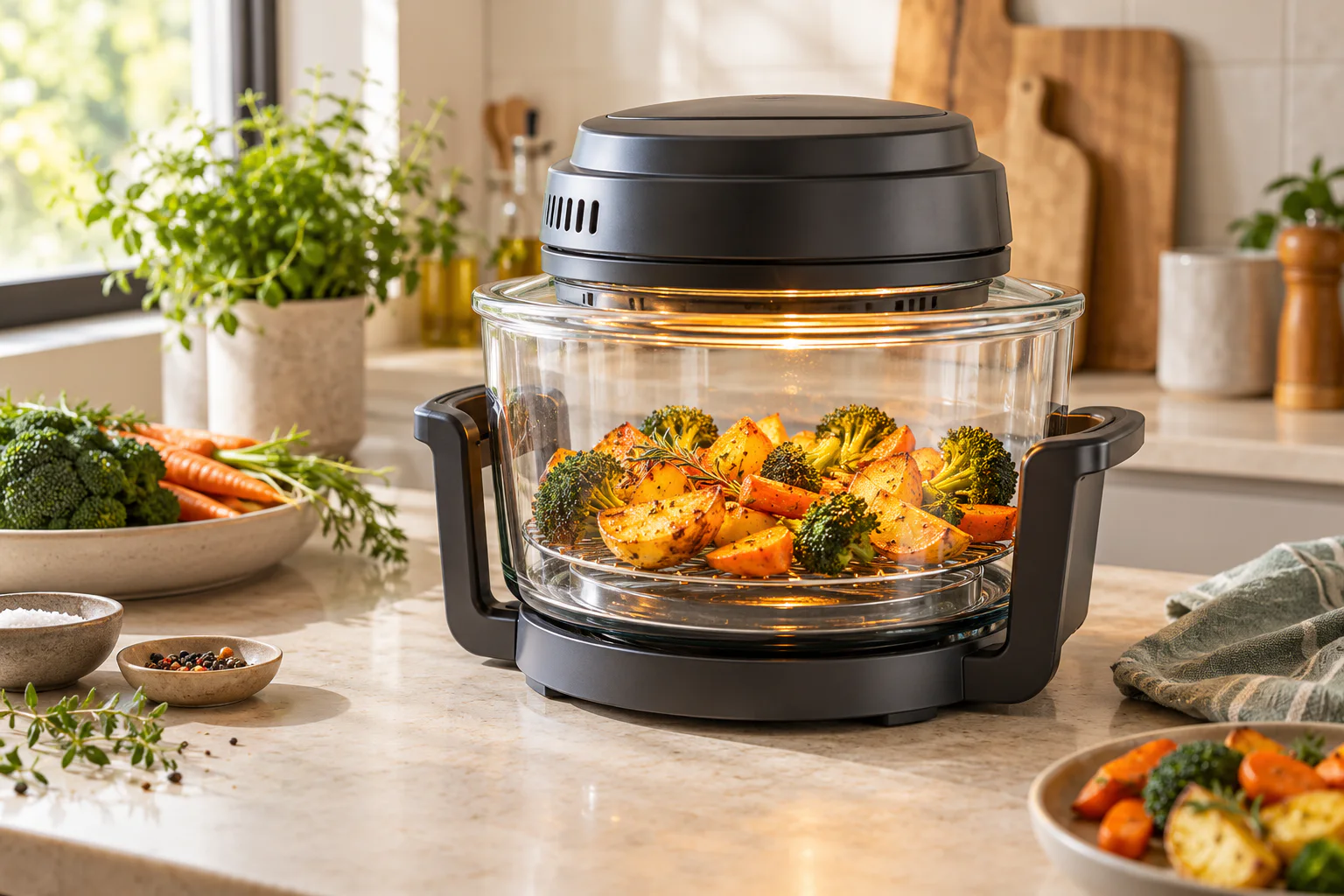
For an oven-style air fryer, remove and wash racks, mesh trays, drip trays and rotisserie accessories according to the manual. Wipe the walls and door once cool, paying attention to the glass edges and crumb tray. Do not spray cleaner directly toward the fan, vents, controls or door seals; apply approved cleaner to the cloth instead.
Models with viewing windows, steam functions or water tanks can have extra care steps. Use only the cleaning or descaling programme described for that model—adding water to an ordinary air fryer does not turn it into a steam-cleaning appliance.
Removing lingering smells
Wash removable food-contact parts promptly, clear grease from crevices with a soft brush and wipe any accessible residue from the cooled interior. Strong foods can leave oil on the underside of the basket or around the heater even when the top surface looks clean.
Let every component dry in the open air before putting the appliance back together. Trapped moisture and a closed drawer can create a stale smell of their own. Store the air fryer clean and dry, and leave the drawer slightly open for a while after washing if your storage space allows.
Avoid masking odours with perfume, essential oils or fragranced cleaning spray. If a burning, electrical or melting-plastic smell continues after the appliance has been cleaned, unplug it and seek manufacturer advice before using it again.
What to do if the air fryer smokes
A small amount of steam from moist food is different from smoke. White smoke is often associated with hot fat or old greasy residue, while dark smoke, sparks or an electrical smell can indicate a more serious problem. Switch off and unplug the appliance if it is safe to do so, and do not reach into a hot cooking chamber.
Once everything is completely cool, check the drawer, basket and accessible interior for pooled fat, crumbs or food touching the heater. Clean only as the manual directs. If smoke returns after cleaning, or you see damage to the cable, plug, coating, fan or heating element, stop using the appliance and contact the manufacturer.
How often should an air fryer be cleaned?
Wash the basket, drawer, crisper plate and other used food-contact parts after every cooking session once they are cool. Empty crumbs and pooled fat rather than leaving them for the next use. Wipe splashes from the exterior and controls with a soft, barely damp cloth.
Inspect the cooled cooking chamber regularly and clean visible grease before it becomes dark or sticky. Check the heating area more closely after fatty or splattering foods, and give oven-style racks and drip trays the same attention. The manual may set out a deeper-clean schedule for filters, water tanks or other model-specific parts.
A five- to ten-minute routine is usually easier than removing carbonised residue later. Never use the self-cleaning cycle of a conventional oven for air fryer parts, and do not reassemble or operate the appliance until everything is completely dry.
Can the basket go in a dishwasher?
Some baskets, drawers and inserts are dishwasher-safe; others must be washed by hand. Check the instructions for your exact model rather than relying on how the part looks. The main appliance, power lead and plug must never go in a dishwasher or be immersed.
Even where the manufacturer permits dishwasher use, hand washing with warm water, ordinary washing-up liquid and a non-abrasive sponge can be gentler on a non-stick finish. If you use a dishwasher, position each part as directed, make sure it cannot strike other items and let it dry completely before returning it to the appliance.
Protecting the non-stick coating
Use silicone, wood or other non-scratch utensils and avoid cutting food inside the basket. During cleaning, do not stack sharp pans or cutlery against coated surfaces. Check removable rubber or silicone bumpers before washing; they may protect the basket from rubbing against the drawer.
Minor staining is not always the same as a failed coating, but flaking, bubbling or a large exposed patch needs attention. Stop using a visibly deteriorating basket and ask the manufacturer whether a replacement part is available. Do not try to repaint or reseal a food-contact surface yourself.
Air fryers vary in power and basket design. Use these timings as a starting point and follow your manufacturer’s instructions where they differ.
Frequently asked questions
Can you use oven cleaner in an air fryer?
Do not use oven cleaner unless your manufacturer explicitly instructs you to. It can damage coatings and leave unsuitable residue in the cooking chamber.
How do you clean baked-on grease?
Soak only removable washable parts in warm soapy water, then loosen residue with a soft sponge or nylon brush. Never immerse the main appliance.
Should you clean an air fryer before first use?
Wash the removable food-contact parts and wipe the appliance as directed by the manual before first use. Dry all components fully.
Can you put water in an air fryer to clean it?
Do not pour water into the main unit or run an improvised steam-clean cycle. Water may reach electrical parts. Only use a built-in cleaning function if your exact model has one and follow its instructions.
Can you use bicarbonate of soda or vinegar?
Only if the manufacturer approves it for the surface you are cleaning. Household remedies can affect some coatings, seals or metal finishes, so warm water and washing-up liquid are the safer default.
Why does my air fryer smell after cleaning?
Check for grease beneath the basket, around removable inserts and in accessible interior crevices, then make sure every part is fully dry. Stop using the appliance and contact the manufacturer if the smell is electrical, burnt or persistent.
How do you clean the top of an air fryer?
Unplug the cool appliance and wipe the exterior with a soft, barely damp cloth. For the inside roof and heater area, use only the access and cleaning method described in your model's manual.
Sources and further reading
Safety, appliance and recipe guidance was checked against the following sources. Always follow the instructions for your own model.