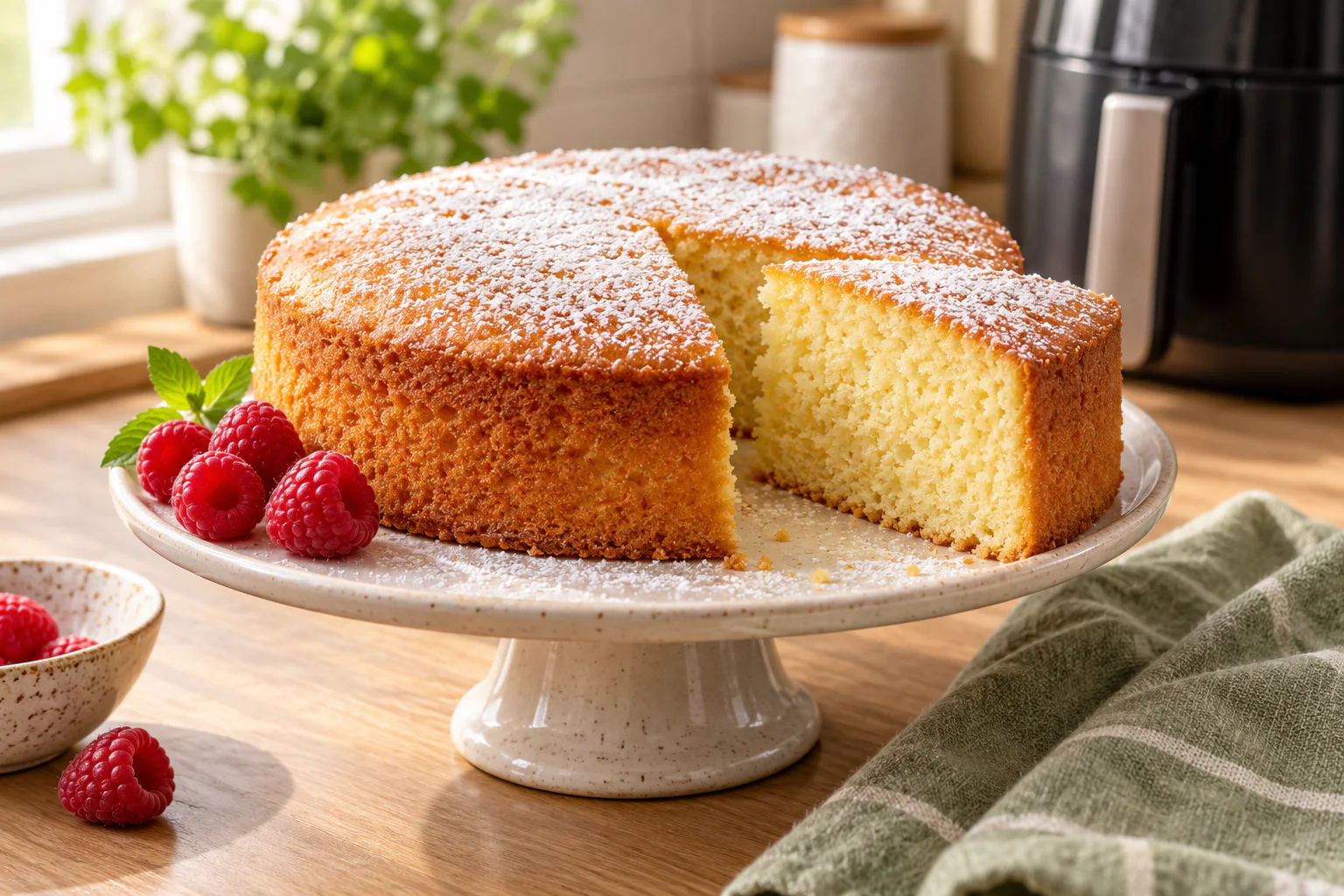
A small sponge cake is one of the air fryer's most sensible bakes. The challenge is not mixing the batter—it is choosing a tin that leaves room for airflow and using gentler heat so the top does not brown before the centre sets.
Bake a 15 cm / 6 inch sponge at 150°C / 300°F for 22–30 minutes in a greased, base-lined tin that fits with clearance around it. Check with a skewer at 22 minutes and add two-minute increments until it comes out clean.
Ingredients and tin
Use a 15 cm round tin roughly 5 cm deep. Check that it is oven-safe, fits the basket without touching the sides and leaves a clear route for hot air.
- 100 g softened unsalted butter
- 100 g caster sugar
- 2 medium eggs, at room temperature
- 100 g self-raising flour
- 1/2 teaspoon vanilla extract
- 1 tablespoon milk, if needed
- A little butter and baking parchment for the tin
Mix the sponge batter
Grease the tin and line its base with a circle of baking parchment contained fully inside the tin. Beat the butter and sugar for three to four minutes until noticeably paler and fluffy.
Beat in the eggs a little at a time, adding a spoonful of the measured flour if the mixture starts to curdle. Fold in the remaining flour and vanilla. The batter should drop reluctantly from a spoon; fold in up to one tablespoon milk if it is very stiff.
Smart tipMake a shallow dip in the centre of the batter before baking. It helps counter the domed top that concentrated air-fryer heat can produce.
Bake the cake in the air fryer
Spoon the batter into the prepared tin and level the surface, making a shallow dip in the centre. Place the tin level in the basket. Preheat first only if your appliance manual recommends it.
Air fry at 150°C / 300°F for 22–30 minutes. Avoid opening during the first 18 minutes. At 22 minutes, insert a thin skewer into the centre; it should emerge clean or with a few dry crumbs.
Cool in the tin for ten minutes, then turn onto a rack and remove the base paper. Let the cake cool completely before filling or dusting with icing sugar.
Stop the top browning too quickly
Air fryer heating elements sit close to the cake, so the top can colour early. A low 150°C setting gives the centre more time to set. If your appliance runs hot, try 140°C and expect a longer bake.
Do not place loose foil or parchment over the cake. If your manufacturer explicitly permits secured foil over a baking tin, follow its method; otherwise lower the temperature rather than improvising a cover near the heater.
Simple fillings and variations
For a mini Victoria-style cake, split the cooled sponge and add a thin layer of raspberry jam with buttercream or whipped cream. Refrigerate a cream-filled cake and bring each slice towards room temperature before serving.
For lemon sponge, replace the vanilla with the finely grated zest of one unwaxed lemon. For chocolate, replace 15 g of the flour with 15 g cocoa powder and add the milk.
Troubleshooting a dense or sunken cake
A dense sponge often comes from under-creamed butter, cold ingredients, heavy folding or too much milk. A sunken centre usually means the cake was opened before its structure set or removed while still wet in the middle.
If the cake is cooked outside but raw inside, reduce the temperature next time and use a shallower tin. Confirm that the tin leaves space around its sides; a tight fit can interfere with circulation.
Storage and freezing
An unfilled sponge keeps in an airtight container for up to three days. Once filled with fresh cream, refrigerate it and follow the cream's storage guidance.
Freeze the cooled, unfilled cake well wrapped for up to three months. Thaw it while wrapped at room temperature so condensation forms on the wrapping rather than the sponge.
Air fryers vary in power and basket design. Use these timings as a starting point and follow your manufacturer’s instructions where they differ.
Frequently asked questions
Can any cake tin go in an air fryer?
Use only an oven-safe tin that your manufacturer permits. It must fit without touching the heater or blocking the airflow around the basket.
Why is my cake raw in the middle?
The temperature may be too high, the tin too deep or the bake too short. Lower the temperature by 10°C and continue until a skewer in the centre comes out clean.
Can you use a silicone cake mould?
Yes if it is rated for the temperature and permitted by your appliance, but it may give softer sides and need a little longer than a metal tin.
Do you have to preheat for cake?
Follow your manual. Some air fryers benefit from a short preheat, while others are designed to begin from cold. Keep your method consistent once you find the timing that works.
Sources and further reading
Safety, appliance and recipe guidance was checked against the following sources. Always follow the instructions for your own model.