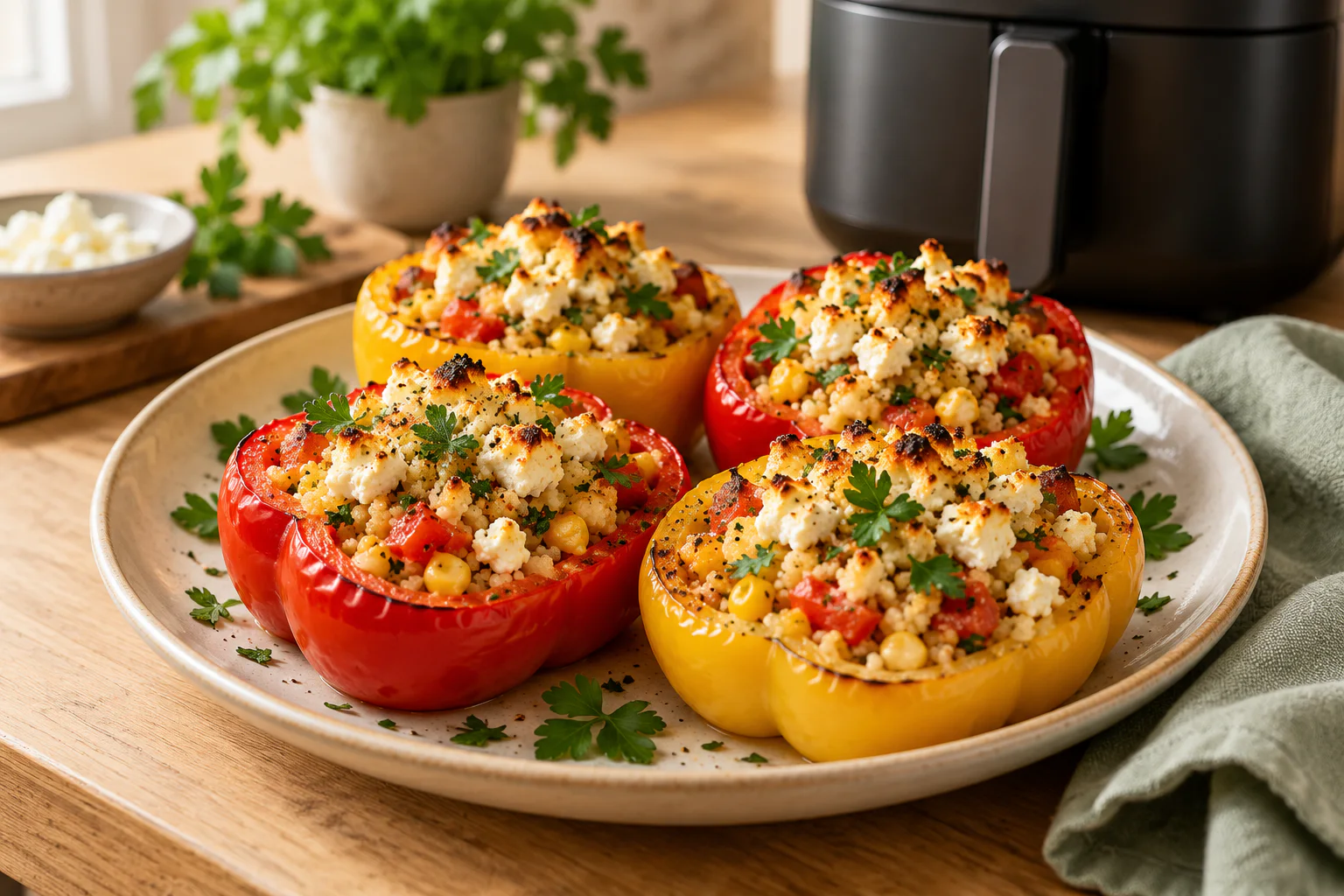
Stuffed peppers turn a few cupboard ingredients into a colourful lunch or light dinner. This suggested vegetarian combination uses freshly prepared couscous, so the air fryer only needs to soften the pepper shells, heat the filling and lightly colour the feta. The timings are a starting guide rather than a claim of hands-on testing.
For two servings, halve two medium peppers and air fry the empty halves at 180°C / 350°F for about 5 minutes. Fill with prepared couscous, chopped tomatoes, sweetcorn and feta, then cook for another 10–15 minutes. The peppers should be tender and the filling steaming hot throughout. Allow longer for thick-walled peppers or a crowded basket, and cook in batches if needed.
Ingredients for two servings
Use ordinary quick-cooking couscous rather than pearl couscous, which needs a different cooking method. Red, yellow and orange peppers all suit this filling. Choose vegetarian-labelled feta and stock if cooking for vegetarians.
- 2 medium bell peppers
- 75 g dry couscous
- Boiling vegetable stock, in the quantity stated on the couscous packet
- 1 teaspoon olive oil
- 100 g cherry tomatoes, chopped
- 60 g tinned sweetcorn, drained
- 60 g vegetarian feta, crumbled
- ½ teaspoon dried oregano
- Black pepper, to taste
- Chopped parsley and lemon wedges, optional, to serve
Prepare the filling and pepper shells
Prepare the couscous with the boiling stock according to its packet instructions. Cover for the stated standing time, then fluff with a fork. Stir in the tomatoes, drained sweetcorn, oregano, black pepper and half the feta. Taste before adding salt because feta and stock can already be salty.
Wash the peppers, halve them lengthways and remove the seeds and white core. Keep the outer shells intact. Rub the cut surfaces with the olive oil. Preheat the appliance only if its manual or programme requires it.
Smart tipChoose peppers with a broad, fairly flat side and cut through the stalk from top to bottom. The halves sit more steadily, so you can lift them without spilling the filling.
Soften, fill and finish in the air fryer
Arrange the pepper halves cut-side up in one layer, with a little room around each. Cook at 180°C / 350°F for about 5 minutes to give the shells a head start. Remove the drawer carefully and spoon the warm filling into each half without packing it down tightly.
Scatter over the remaining feta and return to the air fryer for 10–15 minutes. Start checking at the earlier end: the pepper should yield to a knife, the topping should be lightly coloured and the filling should be steaming hot through the middle. If the topping is browning before the shell softens, reduce to 160°C / 320°F and continue in short intervals.
The suggested total is 15–20 minutes in the air fryer, excluding any separate preheat. Thick-walled or particularly large peppers can take longer. Keep each half upright and use a broad spatula to move it to a plate.
Serving ideas and easy changes
Finish with parsley and a squeeze of lemon. Serve two halves per person with salad for a light meal, or add bread and a yoghurt dressing for something more substantial. The shells and filling will be very hot straight from the basket.
For a dairy-free version, use a suitable plant-based feta alternative. For gluten-free cooking, replace the couscous with freshly cooked quinoa and check the stock and toppings. This changes the recipe, so judge the final filling by how evenly it heats rather than assuming an identical timing.
Keep the filling fluffy rather than watery
Drain the sweetcorn thoroughly and avoid adding extra stock once the couscous is hydrated. If the tomatoes release a lot of liquid when chopped, leave the excess juice on the board. The aim is a moist filling that holds loosely on a spoon.
Do not use this short method for raw mince or uncooked rice. Those ingredients need their own cooking and safety checks; the filling here is built from ready-to-eat ingredients and freshly hydrated couscous.
Cool and refrigerate leftovers promptly
If saving a portion, cool it and put it in the fridge within two hours. General Food Standards Agency advice is to eat refrigerated leftovers within 48 hours or freeze them. If swapping in cooked rice, follow the stricter rice guidance instead.
Reheat only once and make sure the filling is steaming hot throughout. Refrigerated stuffed peppers can take longer to heat in the centre than freshly filled warm ones, so do not reuse the original timing without checking.
Air fryers vary in power and basket design. Use these timings as a starting point and follow your manufacturer’s instructions where they differ.
Frequently asked questions
Can you cook stuffed peppers in an air fryer?
Yes. Arrange the halves upright in one layer. For this couscous version, soften the shells first, add the warm filling and finish until the peppers are tender and the filling is steaming hot.
Do I need to cook the couscous first?
Yes. Hydrate it according to the packet before filling the peppers. Dry couscous will not reliably cook in the pepper from the moisture in the tomatoes alone.
Can I stack stuffed peppers?
Keep them in one layer. Stacking can spill the filling and restrict hot air around the shells. Cook in batches if four halves will not fit comfortably.
Are these stuffed peppers vegetarian?
They are vegetarian when made with vegetarian-labelled feta and vegetable stock. Check the cheese label because some feta uses animal rennet.
Sources and further reading
Safety, appliance and recipe guidance was checked against the following sources. Always follow the instructions for your own model.