A pork belly joint and pork belly slices need different treatment. A skin-on joint benefits from a hot first stage followed by gentler cooking, while individual slices cook much faster and should be turned. This guide keeps those methods separate so the timings remain useful and safe.
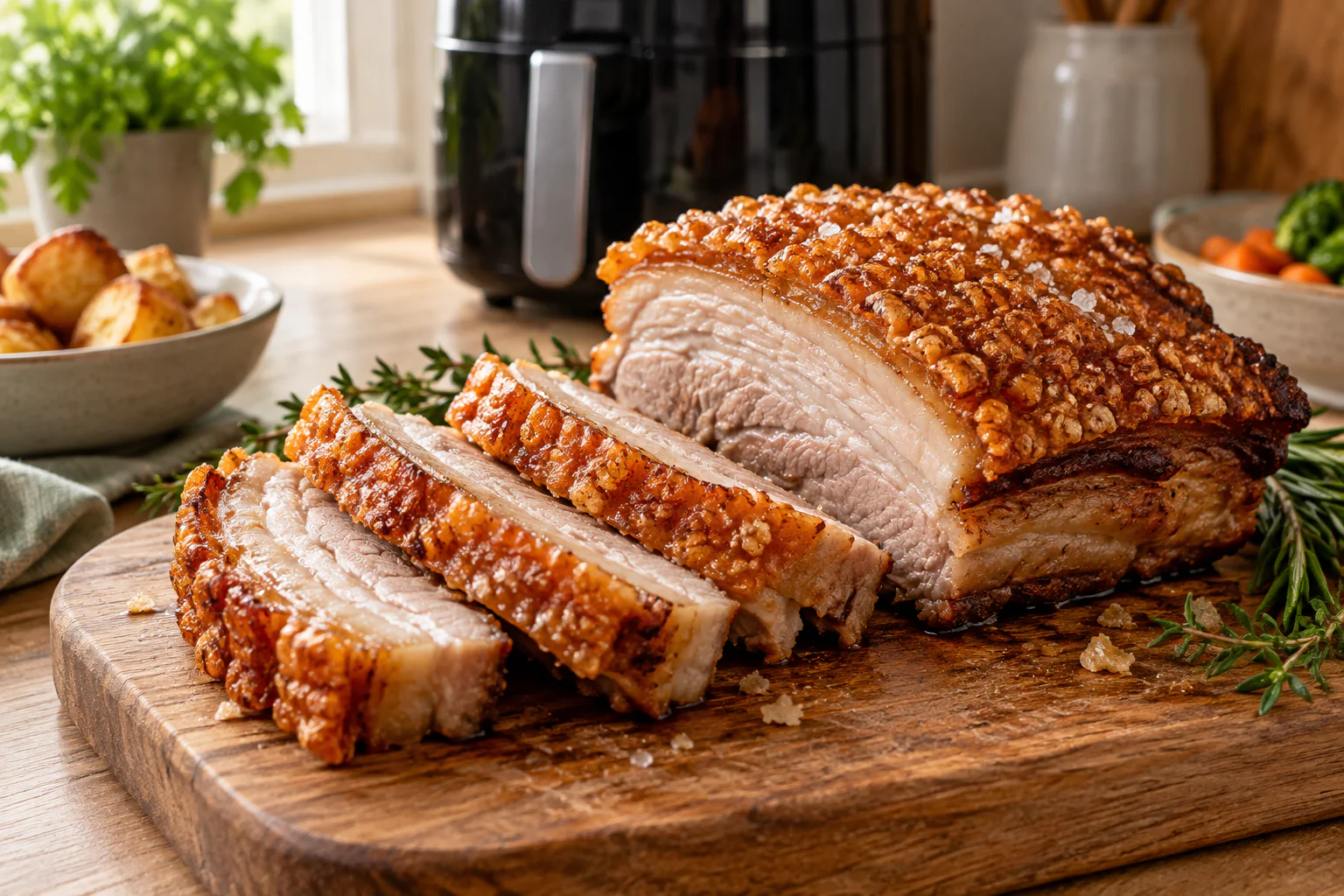
For a 750 g–1 kg skin-on pork belly joint, dry and score the rind, then air fry skin-side up at 200°C / 400°F for 30 minutes. Reduce to 180°C / 350°F for another 20–30 minutes, verify the centre is safely cooked and rest for 10 minutes. For individual belly slices, cook in one layer at 200°C / 400°F for 15–20 minutes, turning halfway and checking the thickest piece.
Choose the correct method for your cut
Use the joint method for one flat, skin-on slab weighing roughly 750 g to 1 kg. A flat rind sits at a consistent distance from the heating element and is more likely to crackle evenly than a strongly curved piece.
Use the slice method for separate belly strips, normally sold without one continuous sheet of rind. Their much larger exposed surface and smaller mass explain why they finish in roughly a third of the time. Do not apply slice timing to a whole joint.
Ingredients for a skin-on pork belly joint
Ask the butcher to score the rind if it is not already prepared. Pork rind is tough and a blunt knife can slip. The cuts should pass through the rind and fat without going deeply into the meat.
- 750 g–1 kg flat skin-on pork belly joint
- 1 teaspoon vegetable oil, for the meat and sides
- 1/2 teaspoon garlic granules
- Fine salt for the dry rind
- Black pepper for the meat side
Smart tipDry the rind uncovered in the refrigerator before cooking if time allows. Surface moisture is the enemy of crackling; seasonings and marinades belong on the meat, not on top of the skin.
Dry, score and season the pork
Pat the pork dry with kitchen paper. For especially crisp crackling, place it uncovered on a plate in the refrigerator so the rind can dry further, then pat it again before cooking. Keep raw pork on the lowest suitable refrigerator shelf and away from ready-to-eat food.
Rub oil, pepper and garlic granules over the meat and sides. Keep the rind dry and rub fine salt into its scoring. Avoid wet marinades or sugary rubs on the rind because they add moisture and can burn before the joint is tender.
How to air fry a pork belly joint
Preheat to 200°C / 400°F if your appliance instructions call for it. Place the joint skin-side up in the basket, ensuring it does not touch the heating element. Cook at 200°C for 30 minutes until the rind is beginning to blister.
Reduce the temperature to 180°C / 350°F and continue for 20–30 minutes. Check the centre with a clean thermometer and use the Food Standards Agency time-and-temperature guidance below. Transfer to a board and rest uncovered for 10 minutes so steam does not soften the crackling.
Cooking time depends on weight, thickness and appliance rather than weight alone. If the meat is safe but the rind needs more colour, give it only a short closely watched finish at 200°C; exposed crackling can move from golden to burnt quickly.
How to cook pork belly slices
Pat approximately 450 g pork belly slices dry. Season with salt, pepper, garlic powder and paprika, adding a light coating of oil only if needed to make the seasoning adhere. Avoid a sugary glaze at the start because sugar can scorch at 200°C.
Arrange the slices in one layer and air fry at 200°C / 400°F for 15–20 minutes, turning halfway. Exact time depends on thickness. Check the thickest slice is safely cooked and that the fat has rendered to your liking; add any sweet glaze only for a brief final stage and watch it closely.
Safe internal temperature for pork
The Food Standards Agency says the middle of food should reach 70°C for two minutes. Equivalent combinations include 75°C for 30 seconds and 80°C for six seconds. Measure in the thickest meat, away from the basket, bone and large seams of fat.
Wash hands after handling raw pork and clean the thermometer between raw and cooked checks. Do not put cooked pork back onto the unwashed plate or board that held it raw.
Why pork belly crackling stays chewy
Moist rind, uneven scoring and a curved joint are common causes. Pat the rind dry, choose a flat piece and distribute fine salt across the surface. Scoring helps rendered fat escape, but deep cuts into the meat release juices onto the rind.
A thick joint also needs enough lower-temperature time for its fat and connective tissue to soften. Extending only the hottest stage may harden the skin while leaving the layers beneath chewy.
Rendered fat and smoke
Pork belly releases a substantial amount of fat. Make sure the cooled drawer is clean before starting and check during cooking only as your manual permits. If the appliance smokes, stop safely and follow its instructions rather than adding water or modifying the basket without manufacturer approval.
Allow the appliance and rendered fat to cool before handling. Do not pour cooking fat down the sink; transfer it to a suitable container for disposal according to local guidance.
Read what to do when an air fryer smokes for the checks to make before using it again.
Resting, storing and reheating
Rest the joint uncovered for 10 minutes, then use a serrated knife to work through the crackling without crushing it. Slice across the meat fibres where their direction is visible.
Cool leftovers and refrigerate within two hours. Eat them within 48 hours or freeze them, following Food Standards Agency guidance. Reheat only once and make sure the meat is steaming hot throughout; reheating can crisp the edges but will not reproduce freshly cooked crackling exactly.
Air fryers vary in power and basket design. Use these timings as a starting point and follow your manufacturer’s instructions where they differ.
Frequently asked questions
How long does pork belly take in an air fryer?
A 750 g–1 kg skin-on joint takes about 50–60 minutes using a hot-then-lower method. Individual belly slices take roughly 15–20 minutes at 200°C / 400°F.
How do you get crispy pork belly crackling?
Use a flat skin-on joint, dry the rind thoroughly, score it without cutting deeply into the meat, salt the dry surface and begin with high heat.
What temperature should pork belly reach?
Use an FSA safe time-and-temperature combination in the centre, such as 70°C for two minutes or 75°C for 30 seconds.
Do you put oil on pork belly skin?
Methods differ. This guide keeps the rind dry and salted, using a little oil on the meat and sides. Dryness and correct scoring matter more than coating the rind heavily.
Can you cook pork belly slices from frozen?
Follow the product packaging. This method is written for fully thawed slices; frozen pieces may brown outside before the centre cooks safely.
Sources and further reading
Safety, appliance and recipe guidance was checked against the following sources. Always follow the instructions for your own model.