A drawer can close easily and still contain too much food for the result you want. The useful question is how much of this particular food your model can cook well, rather than how much you can squeeze inside. Chips, fish fillets and a whole chicken need different loading plans.
Follow your model's food-specific weight limits and never exceed its maximum fill mark. Meat and fragile foods generally need a single layer; chips may overlap where the instructions allow, with shaking during cooking. A maximum capacity is a limit, not a promise of the crispest result. Split the food when the recommended arrangement will not fit.
Find the limit for the food you are cooking
Check the manual's food table as well as any MAX mark. Philips explains that permitted quantities depend on both model and food. Its guidance for chips even recommends a smaller load than the maximum for best results; that is advice for its appliances, not a universal fraction for every basket.
Look up the model number before saving a cooking chart. A chart for a similar-looking machine may describe a different drawer. Keep the correct manual bookmarked so you can check it when changing from chips to a larger item.
Use one layer for food that needs to keep its shape
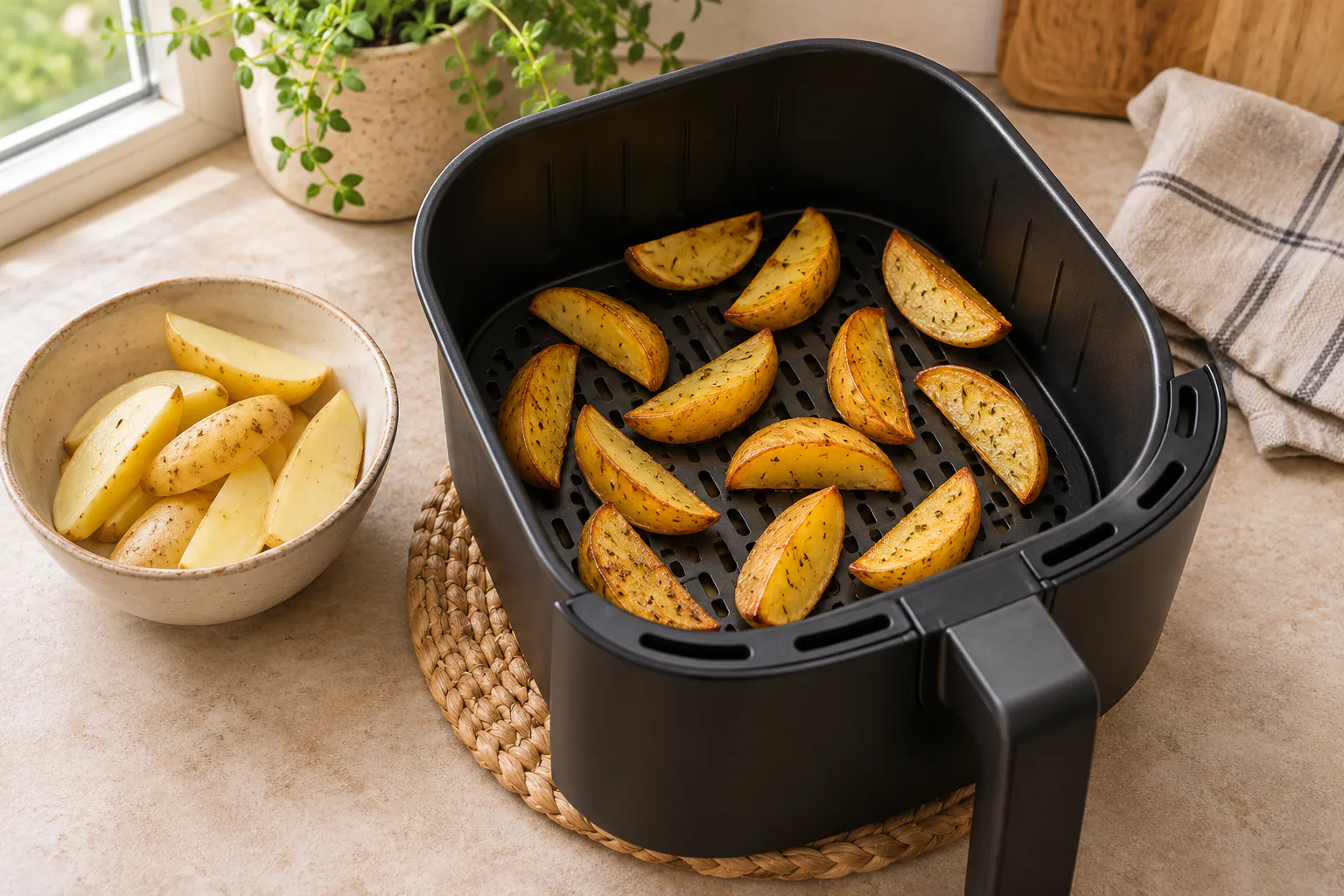
Philips advises spreading meat and poultry in one layer. It also says fragile foods should not be stacked because the movement needed to redistribute them can cause damage. For a delicate fish fillet, plan space across the base rather than building a pile.
Before switching on, arrange the whole portion in the cold basket. If a second layer is the only way to fit it, check whether that arrangement is actually supported. An approved rack needs its own loading instructions; buying a rack does not establish that every stacked recipe will work.
Smart tipWeigh a portion that cooks well in your basket and save the figure with the recipe. You can then plan a second batch before the first one starts, rather than discovering the problem halfway through dinner.
Overlapping chips need movement
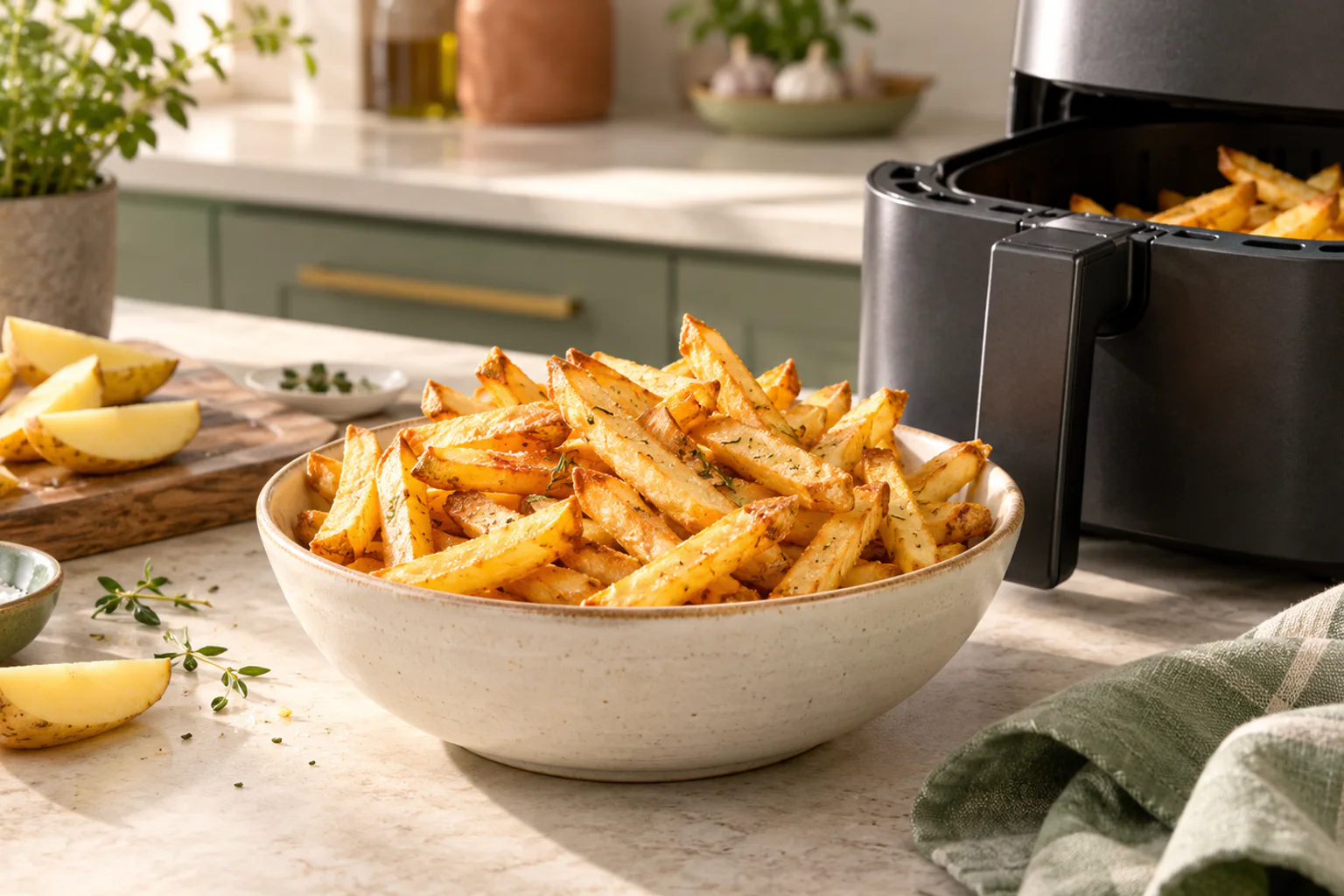
Where overlapping chips are permitted, shaking redistributes them so circulating air reaches different surfaces. Philips says larger loads need more frequent shaking and advises at least three to four shakes for a maximum recommended load of frozen chips. Use the directions for your food and model rather than assuming one halfway shake always covers it.
Set a reminder if your appliance does not provide one. Follow its handling instructions when removing the drawer, and use the pause to check progress before returning it. Shaking does not make an over-limit load acceptable.
For the next step, use our French fry cooking-time guide alongside your packet and model instructions.
Plan the portions before cooking starts
For a family meal, divide the uncooked food into the number of supported loads first. That makes it easier to decide whether another appliance or a different side dish would suit the meal better.
Keep a short record: food weight, arrangement, cooking setting and how often you moved it. If one load worked and a larger one did not, return to the successful portion before rewriting the whole recipe. The litre figure on the box is less useful than a repeatable meal.
If you have two drawers, our Sync and Match guide explains how to coordinate them.
Air fryers vary in power and basket design. Use these timings as a starting point and follow your manufacturer’s instructions where they differ.
Frequently asked questions
Does every food need a single layer?
No. Some chips and other robust pieces can overlap where the model instructions allow it, with shaking or stirring. Fragile food and meat generally call for a single layer.
Can I fill the basket to the top if I shake it often?
No. Stay within the model's fill mark and food-specific limits. Shaking is part of cooking a supported load, not permission to exceed it.
Does a larger litre capacity mean more portions of everything?
Check the food-specific guidance. A recipe that needs a single layer depends on the usable base and permitted arrangement, so litres alone cannot tell you how many pieces will fit.
Sources and further reading
Safety, appliance and recipe guidance was checked against the following sources. Always follow the instructions for your own model.