Sausages are easy to air fry, but one timing cannot cover a slender chipolata, a thick butcher's sausage and a frozen link. Start with the size-specific ranges below, turn during cooking and use the centre—not the colour of the casing—to decide when they are safe to serve.
Arrange fresh sausages in one layer and air fry at 180°C / 350°F for 10–15 minutes, turning every five minutes. Chipolatas are usually ready near the lower end; thick sausages may need the full range. Check the thickest sausage reaches a safe core temperature—75°C for 30 seconds is one Food Standards Agency time-and-temperature combination—before serving.
How to cook sausages in an air fryer
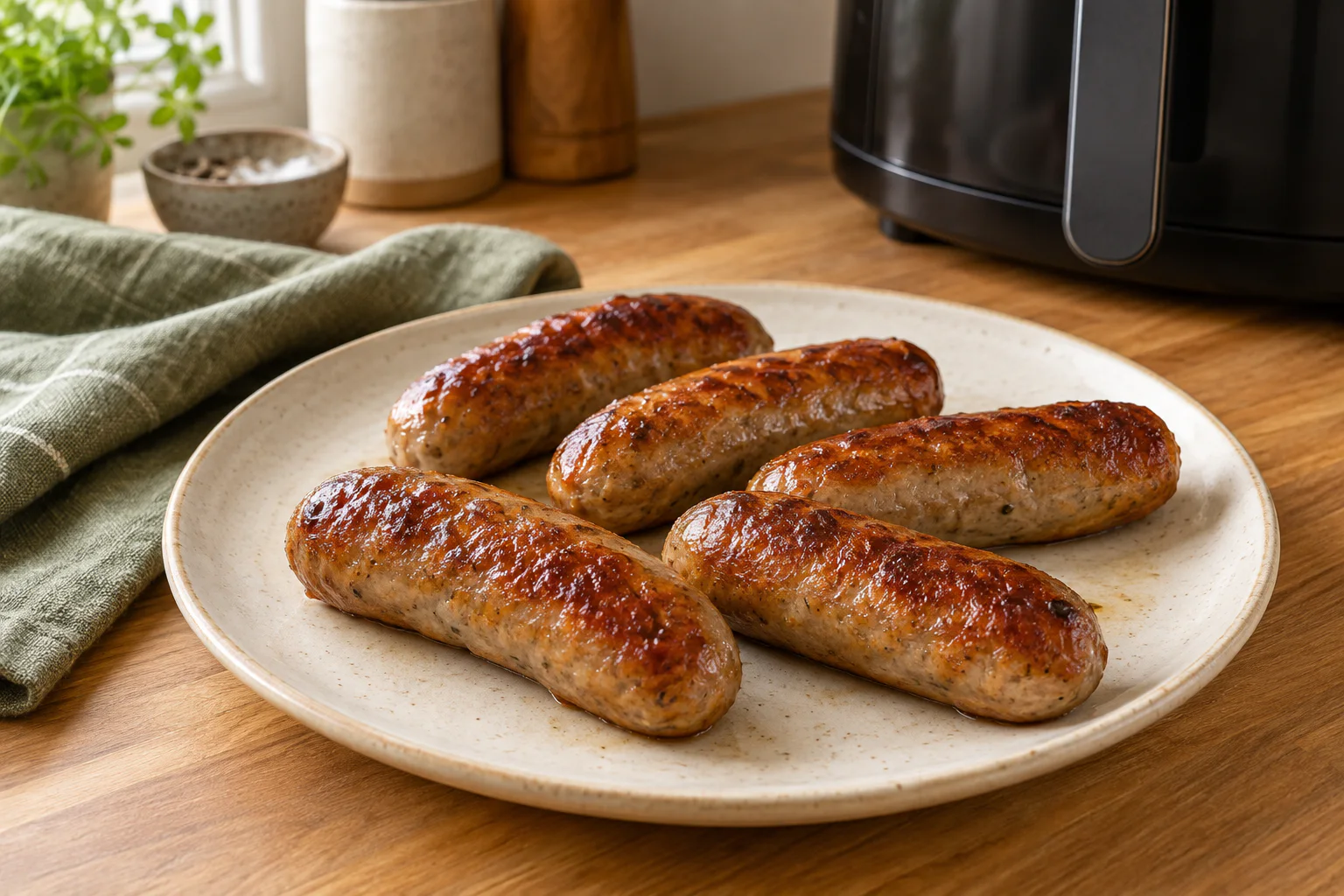
Separate linked sausages and arrange them in the basket in a single layer with a small gap between each one. They normally contain enough fat to brown without extra oil. Preheat only if the packet or your appliance manual tells you to do so.
Air fry at 180°C / 350°F for 10–15 minutes, turning with tongs every five minutes. Start checking slender sausages early. A deeply browned outside does not prove the minced filling is cooked, so check the middle before removing the whole batch.
Let the sausages stand for a minute before serving. If several differ in thickness, remove only those that have reached a safe temperature and return the larger ones to the basket.
Air fryer sausage cooking times
Good Food gives 10–15 minutes at 180°C for fresh sausages. The narrower ranges here separate common UK types, but brand, filling, thickness and starting temperature still matter. Treat the clock as the point at which to begin checking, not as proof of safety.
For packaged vegetarian or vegan sausages, follow the pack first. Lower-fat products can brown differently from meat sausages and some brands are sold chilled while others are frozen.
Smart tipProbe from the end into the centre of the thickest sausage. This places the thermometer tip in the coldest part without losing much juice through the casing.
How to know when sausages are cooked safely
Because sausages are made from minced ingredients, harmful bacteria can be present throughout rather than only on the surface. The Food Standards Agency says the centre of food should reach 70°C for two minutes, or an equivalent combination such as 75°C for 30 seconds or 80°C for six seconds.
Use a clean food thermometer in the thickest sausage, avoiding the basket and any large pocket of fat. Clean the probe after use to prevent cross-contamination. Without a thermometer, cut into the thickest sausage and confirm it is steaming hot throughout with no pink or red meat and clear juices, but a thermometer is the more dependable check.
Can you cook frozen sausages in an air fryer?
Only cook raw sausages from frozen when their packaging permits it. Separate any sausages frozen together before cooking; forcing apart a solid block can damage the casing and leaves cold contact points between them.
One commonly published starting point is 200°C / 400°F for about 20 minutes, turning halfway. Frozen thickness varies substantially, so follow the packet where it differs and confirm a safe centre temperature before serving. If the outside darkens too quickly, reduce the heat and continue until the middle is fully cooked.
Should you prick sausages first?
Pricking is optional. Good Food notes that a few holes help release more fat, while other current UK recipes leave the casing intact. An intact casing generally retains more of the juices; pricking can be useful when a particularly fatty sausage tends to split in your appliance.
Whichever approach you choose, do not crowd the basket. Space and regular turning do more for even browning than piercing the casing.
Managing fat, smoke and splatter
Sausage fat drains beneath the crisper plate. Empty and clean the cooled drawer after cooking rather than letting old fat accumulate, as residue can smoke during later high-temperature cooking. Keep the air fryer's exhaust clear and use it in a ventilated position specified by the manufacturer.
A liner is not required and can stop fat draining away from the sausages. If you use one, choose only a manufacturer-approved liner that fits without blocking the designed airflow, and never put loose paper into an empty preheating basket.
If you notice unexpected smoke, follow our air fryer smoking guide before restarting.
Storing and reheating cooked sausages
Cool leftovers and refrigerate them within two hours. The Food Standards Agency advises eating refrigerated leftovers within 48 hours or freezing them if that will not be possible.
Reheat cooked sausages only once and make sure they are steaming hot throughout. The time varies with quantity and size, so check the centre instead of relying on a universal reheating time.
For a fuller reheating checklist, see how to reheat leftovers in an air fryer.
Air fryers vary in power and basket design. Use these timings as a starting point and follow your manufacturer’s instructions where they differ.
Frequently asked questions
How long do sausages take in the air fryer?
Most fresh sausages take 10–15 minutes at 180°C / 350°F. Chipolatas may finish sooner, while very thick sausages can need longer. Always check the centre.
What temperature should sausages reach?
The Food Standards Agency lists 75°C held for 30 seconds as one safe time-and-temperature combination. Other equivalents include 70°C for two minutes and 80°C for six seconds.
Can you cook frozen sausages in an air fryer?
Yes only when the package says they can be cooked from frozen. A published starting point is about 20 minutes at 200°C / 400°F, but the packet and a safe core-temperature check take priority.
Do you need oil for air fryer sausages?
Most meat sausages release enough of their own fat and do not need added oil. Some lower-fat vegetarian sausages may benefit from a light spray if their packaging recommends it.
Should you pierce sausages before air frying?
It is optional. Piercing releases more fat, while leaving the casing intact retains more juices. Either method still requires turning and a safe doneness check.
Sources and further reading
Safety, appliance and recipe guidance was checked against the following sources. Always follow the instructions for your own model.